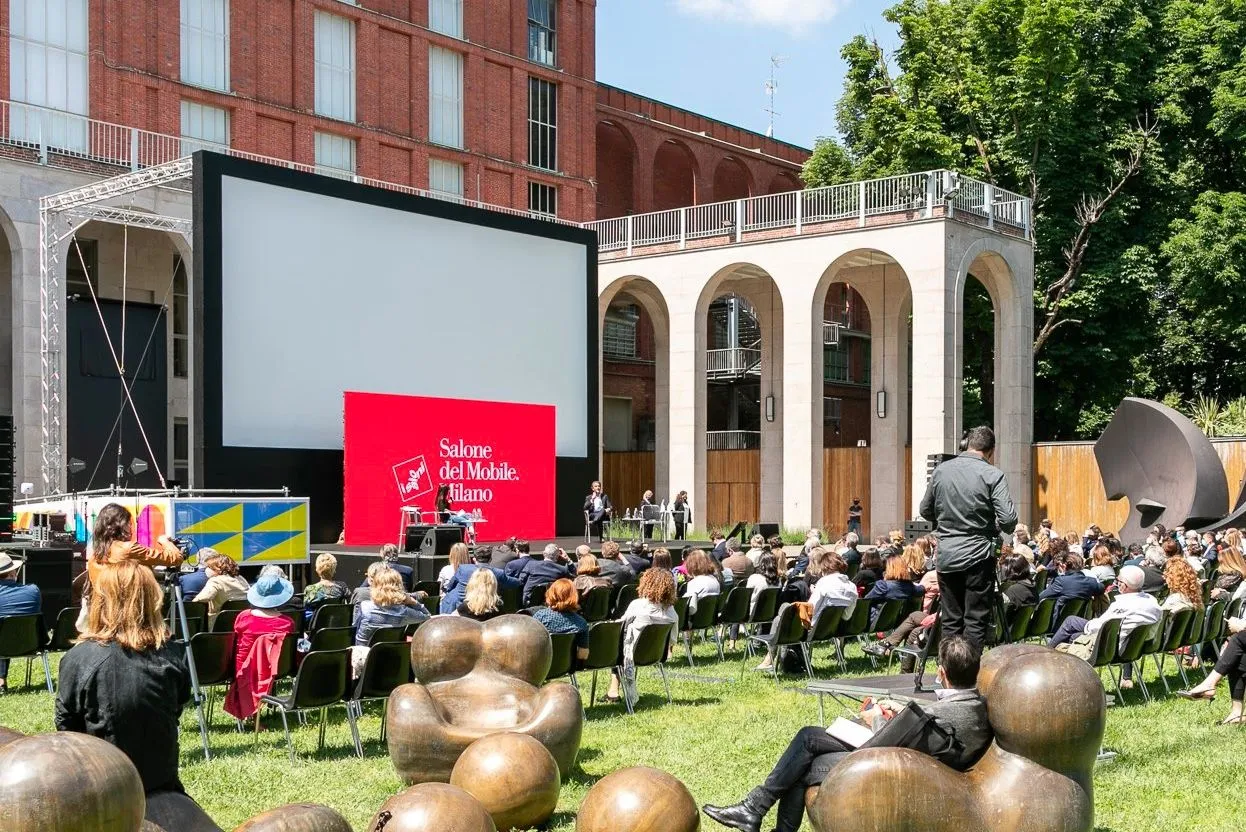
La Triennale di Milano, founded in 1923, is one of Europe’s leading institutions for art, design and architecture. Its home, the Palazzo dell’Arte, was designed by architect Giovanni Muzio and completed in 1933. Exhibitions, concerts and events run side by side, and visitors need to find their way.
The challenge: printed signs nobody looked at
The Triennale used physical signs, posters and paper maps, but they never caught much attention. Demand for information and wayfinding was high, but the results of printed signs couldn’t justify the time and money spent on them. Menus and maps were constantly outdated, causing waste and stress.
Design manager Dario Zampiron evaluated several signage solutions that other institutions had recommended, but none could handle the Triennale’s complex setups. He found Play through a Google search.
The solution: one system for every department
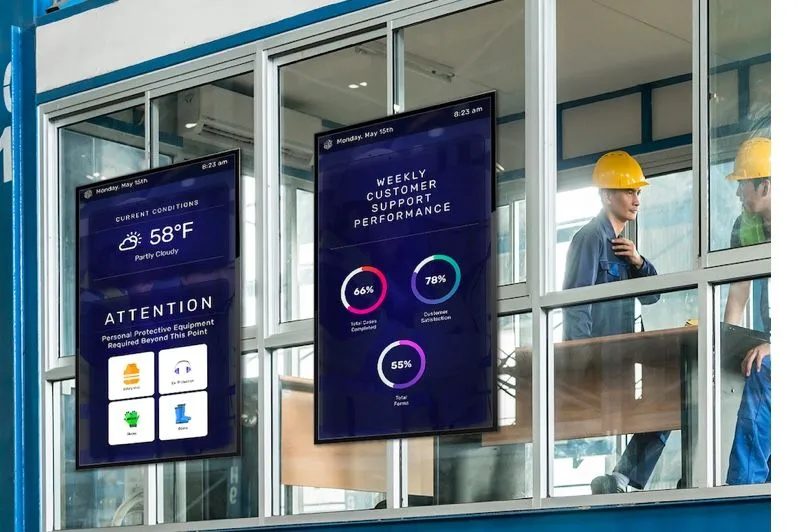
The Triennale needed a cloud-based system that could adapt to many uses, with scheduled playlists and roles for each department. With Play, content is organised in six areas:
- the ticket office
- maps and wayfinding
- concert information
- exhibitions
- touch screen kiosks
- general information
Dario prepares content in advance and schedules it, so the screens change on their own. When something needs updating, he changes it in minutes.
“Every environment can use Play, it is so easy to add in every context.” – Dario Zampiron
The result
Visitors now pay attention to information about events, directions and what to explore. Use of the touch screens has grown, and the screens fit the place so well that they often end up in group photos and selfies. For the staff it is a big workload relief.
Dario chose Play because it was simpler, more cost-effective and more intuitive than the alternatives, which were complicated to set up, more expensive and offered little support.
What other museums and venues can take from this
- Design screens as part of the space; in a cultural venue they can be part of the experience.
- Give each department its own area and schedule, so content stays accurate.
- Touch screens work well for wayfinding when visitors explore on their own.
Read the full La Triennale di Milano case story, or see how Play works for events and exhibitions.
How we write and check our articles:Editorial Policy