How to pick a
media player.
The right media player or Smart TV depends on your content and where your screens hang. Here is what to look for, with players we have tested for each kind of project.
Smart TV or
media player?
A Smart TV is a TV with a media player built in. It is made for Netflix, but has enough power for most digital signage.
- Pick a Smart TV if your content is simple and you need a new TV anyway.
- Pick a media player if you want the player separate from the TV, or if your content is heavy: animations, several zones, websites with script injection or lots of photos and videos.
- Smart TVs usually have little storage, so large playlists fit better on a media player.
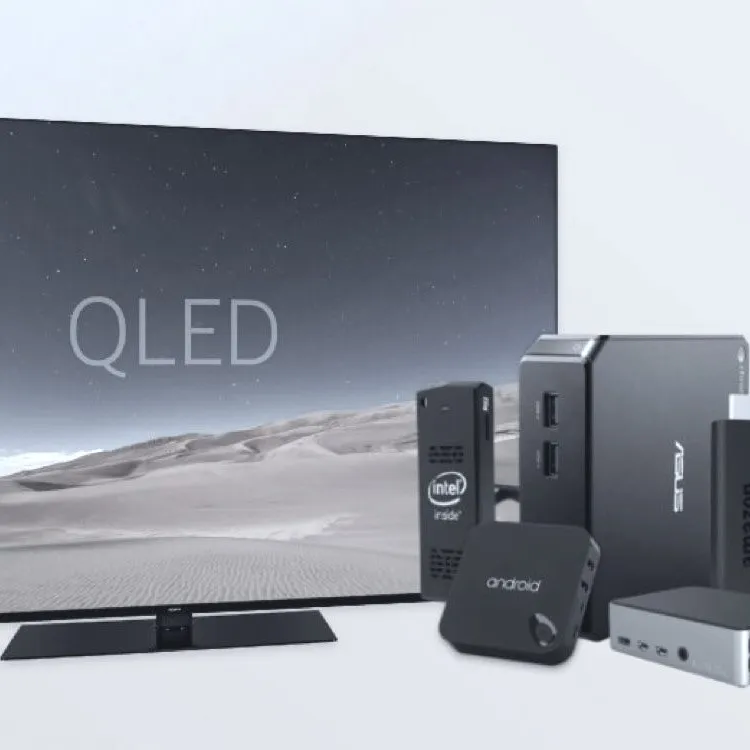
Entry-level or
high-end?
Both run Play. The difference is how much content they handle, and how reliably.
Entry-level media players
For basic content like images and video. Low price, easy to use, and good for years in a simple project.
- Not built for 24/7. Expect short interruptions, for example when a Fire TV Stick updates itself.
- Zones, animations, playlist-in-playlist or heavy playlists can crash them.
- Rated for room temperature, so not for hot, cold or humid places.
High-end media players
Run any type of content. Prices start at around $150, on Windows, macOS, Android, Linux or BrightSign.
- Fully under your control: no system updates interrupting your content.
- Can be rated for extreme conditions, like outdoor LED screens or hot production halls.
- Hundreds of configurations to choose from.
What media player
fits your project?
Pick the example closest to yours. Still unsure? Contact us and we will point you in the right direction.
Indoor: images and video
Budget, entry-level players. Fine for images and video, but zones, transitions and animations can be too much for them.
Indoor: one zone and animations
Run images, video, transitions, one zone and animations. Check each player's limits if you plan to show 4K content.
Indoor: 4K, multiple zones and animations
Players that are really computers, with strong processors and plenty of memory and storage. They handle anything, but configurations vary, so check the specs.
Indoor: 24/7 reliability
Choose a purpose-built professional player from BrightSign, iBase or similar, and mind freezers or hot cabinets. We don't recommend specific players here, but these systems are the most reliable:
Outdoor: 24/7 reliability
First check temperature (below 20°F or above 90°F), moisture and dust, then choose a purpose-built player from BrightSign, iBase or similar. The most reliable systems:
Don’t have a player yet?
We support every major operating system, from a $20 entry-level player to a Windows PC. These are the systems we recommend most, but use any you like.
Android
See players: Android
Windows
See players: Windows
macOS
See players: macOS
Amazon
See players: Amazon
Chrome
See players: Chrome
Samsung
See players: Samsung
BrightSign
See players: BrightSign
Linux
See players: Linux
Raspberry Pi
See players: Raspberry Pi



Media player
questions.
Not sure which player fits? Contact us
Should I use a Smart TV or a media player for digital signage?
A Smart TV is enough for simple content like images and video. Choose a separate media player for heavy content, such as animations, several zones or many videos, or if you want to keep the player and the TV apart.
Can an entry-level media player run 24/7?
Not reliably. Entry-level players like the Fire TV Stick are not built for 24/7 use and update themselves, which causes short interruptions. For round-the-clock screens, choose a professional player from BrightSign, iBase or similar.
How much does a digital signage media player cost?
Entry-level players start at around $20. High-end media players, which can run any type of content, start at around $150.
Which operating systems does Play Digital Signage support?
Every major one, including Android, Windows, macOS, Amazon Fire OS, ChromeOS, Samsung Tizen, LG webOS, BrightSign, Linux and Raspberry Pi.
Can I try Play before I buy a media player?
Yes. Install the Play app on your computer and it becomes your first screen, free and with every Pro feature, so you can test your content before choosing a player. See how to get started.


It’s time you take it for a spin.
Creating an account is free, with no upfront costs and no credit card. Sign up and explore, or book a demo for a personal walkthrough.