-
Download the app
To download and install our app, go to the Google Play Store and search for Play Digital Signage.
Stuff you should know
We’ve gathered some of the most common features you may need to get your Google Chromecast up and running smoothly.
From start to finish
Watch this video, where we unbox the Google Chromecast, connecting it to a TV, and finding, downloading, and installing the app.
Launch app on startup
Starting from Android 10, our app needs to be granted “Display over other apps” permission so that it can launch itself after the device starts up. Our app does not actually display over other apps, but Android’s permission system doesn’t let an app start itself without this permission.
If you did not grant the permission initially, you can find it in Settings -> Apps -> Special app permissions -> Allow display over other apps -> Play Digital Signage.
If the app does not launch on startup even after granting the permission, check for Chromecast updates; older Chromecast versions had a problem that has since been fixed.
Other stuff you might need to do
Disable energy saver
Make sure that the energy saver is disabled so that your device won’t turn off the TV.
- Go to Settings
- Select System
- Select Energy Saver
- Make sure it’s set to Disabled
Display Over Other apps
Before starting our app, newer Android devices (Android 10 and onwards) require additional permissions to be explicitly granted for the autostart to work.
Please note that some Google Chromecast with Google TV devices (depending on the version) will not allow our app to auto-launch.
- Navigate to settings in the top-right
- Navigate to apps
- Select Special app access
- Select Display over other apps
- Grant permission to the Play Digital Signage app
Watch the video to see where to find this permission.
MDM for Android Digital Signage
MDM stands for mobile device management and is usually used to easily manage your media players, in this case Android devices.
There are several options for MDM on the market, for almost any operating system, so it’s up to you to find the MDM that suits your needs best.
Check out Headwind MDM for Android.
Options & FAQ
Options can be accessed directly on the TV by using OPTIONS.
Options
Options can be accessed directly by the player or in settings for your player.
- Launch player on startup - Toggle this ON to make sure our app starts when your player starts up, for example after a power outage.
- Show top menu bar - Toggle this ON if you want the top bar to appear when moving the mouse or using the remote for your player. Toggle this OFF if you want a kiosk experience where users can’t exit the app by clicking the exit button on the top menu bar. You can still access the menu with the “Ctrl + O” command.
- Optimize for touchscreen - Toggle this ON if you are planning on using our app on a touchscreen. This setting will make small adjustments to how our app works in conjunction with a touchscreen.
- Analytics - Toggle this ON if you need analytic data from this particular player. Read more about Analytics
- Display Orientation - This option should only be used if your player’s operating system does not support changing the orientation, as we recommend the adjustment on an operating system level instead. You have the option of portrait (Clockwise) and portrait (Counter-clockwise).
- MediaPlayer engine - Select which video player the device will use to play videos:
- MediaPlayer - the default MediaPlayer built into the device. We default to MediaPlayer as in our experience it has better support across a variety of devices.
- ExoPlayer - A video player built by Google. It promises better codec support, and on some devices it may work better; on others, it may not work at all.
- Website plugin engine - Select how the player will render websites:
- WebView - This option creates a new browser instance to render the website. Using this option, you can also use website scripting functionality; however, the zoom option works differently.
- iframe - This option creates an iframe in the same browser process that our app is rendered in. IFrames do not support website scripting and are limited by other web security restrictions, such as X-Frame-Options where a website owner can prevent the website from being shown in an iframe. However, the iframe option performs better with the zoom option and adheres to scaling to the desktop version better than the WebView option.
- UserAgent - UserAgent is a piece of text that browsers use to identify themselves to the web server. Certain websites will render a mobile view if they detect an Android userAgent, although the site is displayed on a big screen. With this option, you can work around this issue and spoof a desktop computer’s UserAgent. The UserAgent lets you pick Default, Mobile, Desktop, or Custom.
- Reload player every day at - It is good practice to clear the cache on the player once every 24 hours. Here you can set a convenient time, for example, at night when no one is watching your TV. Rooted devices are rebooted; unrooted devices simply restart our app.
- Tags - If you are using tags, they are listed here. You can also find and add a tag.
- Clear cache - If you need to clear the cache manually, you can do that here. For example, if you are changing your content continually and you experience something not working as expected, clearing the cache should help, as it removes any old data stored on the players’ storage.
- Transfer Screen - Move screens between teams without deleting or relinking them. Learn more about Transfer Screen
- Reload - Reloading your player is similar to clearing the cache. In addition, reloading will close and start the app.
- Status - Status tells you if the app is connected to the cloud. Green means you are connected, and red means you are not connected. If you see a red status, you should check the internet and wifi connection to your player.
- Device Time - The device time tells you the player’s time and date. If the device time is wrong, it will also be wrong in our app and thus all time-related scheduling will be off, so make sure to correct the time on the player operating system if you are having problems.
- Resolution - The resolution is the resolution according to your player’s operating system. If the operating system on the players tells us it’s running HD, your content on the TVs will be optimized for HD. Please note that many devices that are advertised as 4K can only decode video in 4K but run apps in a lower resolution. This means you may see a lower resolution reported by our app, but any 4K video that you use will still be played as 4K. If you are seeing a lower resolution, you can install a 3rd party “resolution checker” app on the device to confirm the resolution from another app as well.
- Version - This is the version of our app.
- Screen ID - Also called UID: the unique ID of your player.
- Disc Usage - Disc usage will tell you how much data has been used on the player’s storage. We recommend using no more than 80% of the storage.
- Android Settings - This is reserved for developers only.
- Screen edges - If you have an LED screen, a video wall or an older TV, you might have to adjust the edges so that they match your TV and the content.
- Browser - Here you can easily access the browser used by the app to check content, connectivity, etc.
- Reset - If you need to unlink your player or link it to another account, you can use reset.
FAQ
How do I set up the display in portrait mode?
See the Android section of our portrait guide.
My device says it’s offline
If the device is offline, it means the device is not connected to the internet and therefore cannot connect to our digital signage cloud. See our Offline guide.
The plugins don’t work
If one or more plugins don’t work on your Android, the Play Digital Signage app on your player may be out of date. Read how to update an outdated app.
How do I access OPTIONS if I disabled the top menu bar?
In the app options, you can hide the top menu bar, for example if you are running a touch screen. To access the top menu bar when it is hidden, you can use CTRL + O for options or CTRL + Q to close the app.
Can I use any Chromecast?
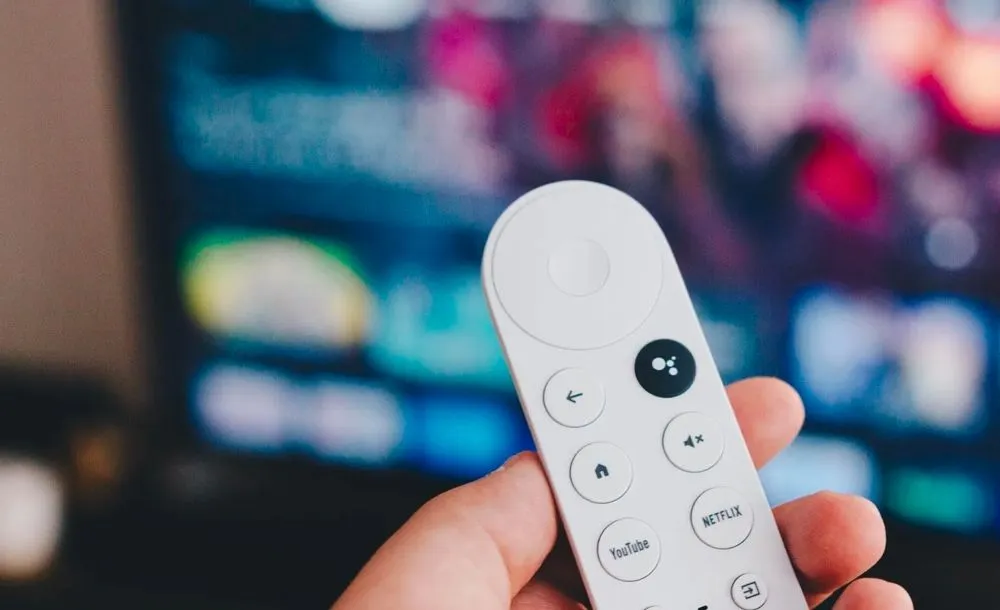
Unfortunately not. The first generations of Google Chromecasts had no local storage, meaning they were not suited for digital signage in general. The Google Chromecast with Google TV works well as a digital signage player, but Google has discontinued it. For a new player, we recommend its successor, the Google TV Streamer.
Why does auto-launch have an exclamation mark?
Starting from Android 10, our app needs to be granted “Display over other apps” permission so that it can launch itself after the device starts up. See Launch app on startup above.